

Cadillac’s LYRIQ is one of the most talked about electric SUVs on the market right now, and a big part of that reputation comes down to how customizable the driving experience feels. Whether you are cruising down the highway or tackling a snowy commute, the LYRIQ adapts to the road through a set of selectable driving modes.
This guide breaks down every mode available on the LYRIQ, compares it to what you will find on the Cadillac XT4 and Escalade, and explains exactly how each setting influences your battery usage and real world range.
Understanding Cadillac LYRIQ Driving Modes
The LYRIQ uses Cadillac’s Driver Mode Control system, accessible through a button or dial near the center console, or through the touchscreen infotainment menu. Selecting a mode changes several vehicle parameters at once rather than just one setting.
In most trims, the LYRIQ offers four main modes:
- Tour Mode, the default setting for daily driving
- Sport Mode, tuned for a more engaging and responsive feel
- Snow/Ice Mode, built for low traction surfaces
- My Mode, a fully customizable profile
Higher performance V-Series LYRIQ trims add extra tuning options, including a more track focused setting that sharpens throttle mapping and steering feel even further. Regardless of trim, the mode you choose changes how the electric motors respond to your right foot, how the steering wheel feels in your hands, and how aggressively the vehicle recovers energy when you lift off the accelerator.
It is worth noting that switching modes does not require you to stop or put the vehicle in park. You can change modes while driving, and the LYRIQ will smoothly transition to the new calibration within a second or two. Experiencing these advanced driving dynamics becomes even more appealing when you acquire the vehicle via an EV salary sacrifice scheme, which makes driving a high-spec electric SUV remarkably affordable through pre-tax salary savings.
Cadillac XT4 Drive Modes
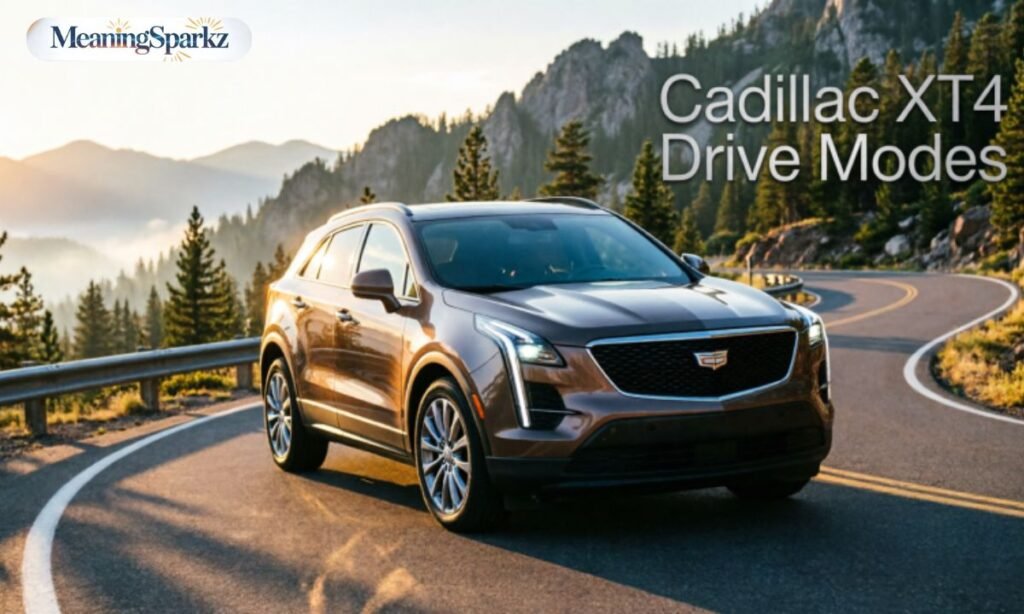
The XT4, Cadillac’s compact gas powered crossover, uses a similar Driver Mode Control philosophy but with a lineup shaped by whether the vehicle is front wheel drive or all wheel drive.
On front wheel drive XT4 models, drivers can choose between Tour, Sport, and Snow/Ice modes. All wheel drive XT4 models swap out the dedicated Snow/Ice setting for two additional options: AWD Mode and Off-Road Mode, alongside Tour and Sport.
Here is a quick breakdown of what each XT4 mode does:
| Mode | Best For | What It Changes |
| Tour | Daily commuting | Balanced throttle, optimized fuel economy, comfortable ride |
| Sport | Spirited driving | Tighter steering, quicker throttle response, firmer handling |
| Snow/Ice (FWD only) | Icy or wet roads | Softer pedal mapping to reduce wheel slip |
| AWD (AWD models) | Wet or snowy pavement | Engages rear wheels for added grip on paved surfaces |
| Off-Road (AWD models) | Gravel, mud, sand | Adjusts traction control and throttle for loose surfaces |
One detail that trips up a lot of new XT4 owners is that the vehicle does not always remember your last selection. Tour and AWD modes carry over to the next time you start the car, but Sport, Snow/Ice, and Off-Road reset back to Tour Mode every time you restart the engine.
Read More Knowledgeable articles Click Here
How to Change Drive Mode on Cadillac Escalade
The Escalade, including the all electric Escalade IQ, gives drivers one of the most extensive mode lineups in the Cadillac family. Changing modes is simple and can be done in two ways.
Using the console controller: Most Escalade trims have a physical Driver Mode Control button or rotary dial near the shifter. Pressing or turning it cycles through the available modes, with the current selection displayed on the driver information center.
Using the touchscreen: On the main infotainment display, tap the vehicle status or settings icon, then select Driver Mode Control. From there, you can tap directly on the mode you want, including Tour, Sport, Off-Road, Tow/Haul, Snow/Ice, or AWD, depending on your configuration.
A few practical tips for Escalade owners:
- Tow/Haul Mode should be engaged before towing, not after, since it changes gear hold behavior and throttle mapping to reduce excessive shifting under load.
- Off-Road Mode adjusts traction and stability control thresholds, so it is meant for gravel, sand, or mud rather than daily pavement driving.
- On the Escalade IQ, Snow/Ice Mode also modifies regenerative braking behavior slightly to prevent sudden weight transfer on slick roads.
Just like the XT4, some Escalade modes revert to Tour on the next startup, so check your owner’s manual for your specific model year to confirm which settings persist.
Does Battery Capacity Change Between Driving Modes?
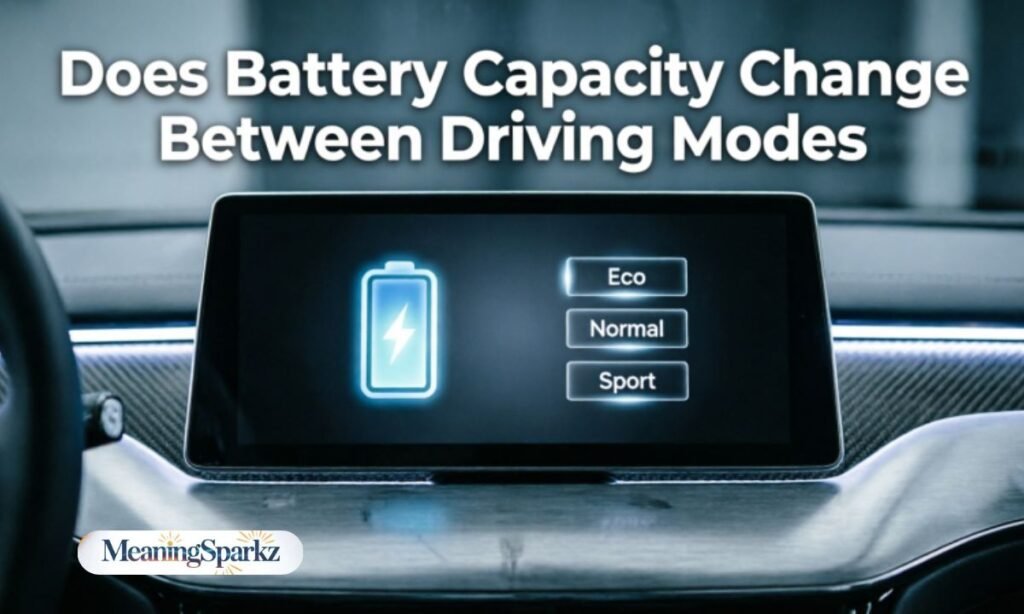
This is one of the most common questions LYRIQ owners ask, and the answer is straightforward. No, switching driving modes does not physically shrink or expand your battery capacity. The LYRIQ’s battery pack holds the same usable energy whether you are in Tour, Sport, Snow/Ice, or My Mode.
What changes is not the size of the battery, but the rate at which it discharges. Think of it less like changing the size of your fuel tank and more like changing how heavy your foot is on the pedal. Sport Mode encourages, and rewards, quicker acceleration, which pulls more current from the battery in short bursts.
Cadillac does not publish separate EPA range ratings for each mode. The official range figure, up to roughly 326 miles depending on trim and configuration, is based on standardized testing conditions rather than any single drive mode. Real world range in any mode will vary based on speed, temperature, terrain, and driving habits.
How Driving Modes Affect Battery Usage
While the battery itself stays constant, the way you use it changes significantly between modes. Four systems are primarily responsible for this difference.
Power Delivery
Each mode adjusts how quickly the electric motors respond to accelerator input. Tour Mode ramps up power gradually, which reduces peak current draw.
Sport Mode allows near instant torque delivery, which is part of what makes electric acceleration feel so quick, but it also means the battery is working harder in short, intense bursts.
Throttle Response
Throttle mapping determines how much motor output you get for a given amount of pedal travel. In Tour Mode, the first inch or two of pedal travel produces a gentle, linear response.
In Sport Mode, that same pedal travel produces a much sharper jump in power, which is part of why aggressive acceleration in Sport Mode consumes noticeably more energy than the same maneuver in Tour Mode.
Steering Calibration
Steering effort does not directly drain the battery in a meaningful way, but it does shift the overall character of the drive.
Sport Mode tightens steering feel and reduces power assist slightly, encouraging a more spirited driving style that often leads to more frequent acceleration and braking, which indirectly increases energy use.
Regenerative Braking
Regenerative braking captures energy that would otherwise be lost as heat when you slow down, feeding it back into the battery. The intensity of regen can vary depending on the selected mode and any additional regen settings you choose through the touchscreen.
Tour Mode: Best Choice for Maximum Range
If maximizing range is your top priority, Tour Mode is the clear winner. It is also the default mode the LYRIQ starts in every time you turn the vehicle on, which makes it the easiest mode to stick with for daily errands and commuting.
Tour Mode’s smooth, gradual power delivery keeps energy consumption predictable and reduces the sharp current spikes that come from quick acceleration. Combined with a light foot on the pedal and good use of regenerative braking, Tour Mode consistently delivers the best real world efficiency of any setting on the LYRIQ.
A frequently overlooked detail is that Tour Mode also tends to produce a more comfortable ride, since suspension and steering are tuned for smoothness rather than sharpness. For long highway trips where range matters more than driving excitement, Tour Mode combined with cruise control and a steady speed is your best strategy.
Sport Mode: Better Performance, Higher Energy Consumption
Sport Mode exists for drivers who want the LYRIQ to feel quick and engaging. Throttle response tightens up considerably, steering effort increases, and the overall character of the vehicle shifts toward something closer to a performance SUV than a comfortable daily driver.
The tradeoff is energy consumption. Aggressive acceleration in Sport Mode can reduce range by roughly 10 to 20 percent compared to Tour Mode, depending on how often you use full throttle. This does not mean Sport Mode is inefficient by design. If you drive gently while in Sport Mode, the range penalty shrinks considerably.
Sport Mode is a great choice for a fun weekend drive or when merging onto a busy highway, but it is not the mode to rely on if you are trying to stretch every mile out of a charge.
Snow/Ice Mode: Prioritizing Safety Over Speed
Snow/Ice Mode is built around one goal: keeping the vehicle stable and controlled on low traction surfaces. It softens throttle response significantly, which reduces the chance of wheel slip when accelerating from a stop on ice or packed snow. It also adjusts the electric all wheel drive system to better balance power between the front and rear motors for improved grip.
Energy usage in Snow/Ice Mode is a mixed bag. On one hand, the gentler throttle mapping can slightly reduce aggressive power draws. On the other hand, cold weather itself is one of the biggest range killers for any EV, since battery chemistry becomes less efficient in low temperatures and cabin heating draws additional power.
The priority in Snow/Ice Mode is control, not efficiency, and that is exactly how it should be used.
My Mode: Personalized Driving Experience
My Mode gives drivers direct control over individual vehicle parameters instead of relying on a preset combination. Through the infotainment system, you can adjust settings like accelerator response, steering effort, and suspension tuning (where equipped) to build a profile that matches your preferences.
This is particularly useful for drivers who like Tour Mode’s efficiency but want slightly quicker throttle response, or who enjoy Sport Mode’s steering feel but prefer a smoother, less aggressive pedal map. My Mode essentially lets you split the difference and save your favorite combination for future drives.
Because My Mode is fully customizable, its impact on battery usage depends entirely on how you configure it. A gentle My Mode setup can rival Tour Mode’s efficiency, while an aggressive configuration can approach Sport Mode’s energy consumption.
One Pedal Driving and Energy Recovery
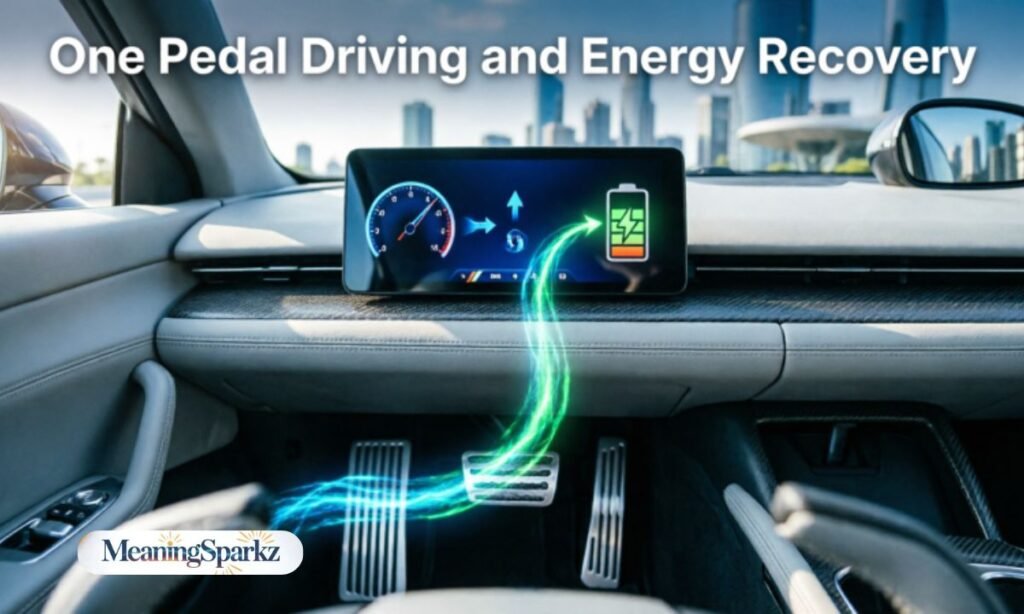
One Pedal Driving is a separate feature from the main drive modes, but it works alongside them to significantly affect both range and driving feel. When enabled, lifting off the accelerator applies strong regenerative braking, often enough to bring the vehicle to a complete stop without touching the brake pedal.
This feature is available across most drive modes and is particularly effective in city driving, where frequent stops and starts create many opportunities to recapture energy. Owners who use One Pedal Driving consistently in stop and go traffic often report noticeably better efficiency than those who coast and use the friction brakes more often.
A common mistake new LYRIQ owners make is leaving One Pedal Driving off simply because it feels unfamiliar at first. After a short adjustment period, most drivers find it becomes second nature, and the range benefits make it worth the learning curve.
Which Driving Mode Offers the Longest Range?
Tour Mode consistently offers the longest real world range among the LYRIQ’s driving modes. Its smooth throttle mapping, balanced power delivery, and default regenerative braking settings work together to minimize unnecessary energy draw.
For drivers who want to push efficiency even further, pairing Tour Mode with One Pedal Driving, maintaining steady highway speeds, and limiting aggressive climate control use will produce the best possible range on a single charge. My Mode can match or occasionally slightly exceed Tour Mode’s efficiency if configured conservatively, but Tour Mode remains the simplest and most reliable choice for maximizing distance.
Frequently Asked Questions
What are the hidden features of the Cadillac LYRIQ?
Beyond the main driving modes, the LYRIQ includes several lesser known features such as adjustable regenerative braking strength, a customizable My Mode profile, ambient cabin lighting tied to drive mode selection, and Super Cruise hands free driving on compatible trims.
Is it okay to switch drive modes while driving?
Yes, the LYRIQ is designed to allow mode changes while in motion. The transition between modes happens smoothly within a second or two, and there is no need to stop or shift into park before switching.
Do the driving modes in Cadillac LYRIQ offer different ranges or battery usages?
The modes do not change the physical battery capacity, but they do affect how quickly that capacity is used.
Is it okay to drive in Sport mode all the time?
It is not harmful to the vehicle to use Sport Mode regularly, but it will reduce your average range compared to Tour Mode.
Final Thoughts
Cadillac’s driving modes across the LYRIQ, XT4, and Escalade all serve the same basic purpose: giving drivers control over how their vehicle feels and performs in different conditions.
For the LYRIQ specifically, Tour Mode remains the best all around choice for maximizing range, Sport Mode delivers a noticeably more engaging drive at the cost of some efficiency, and Snow/Ice Mode trades a bit of energy economy for meaningfully better control in winter conditions.
My Mode rounds things out by letting you build a setup that fits your exact preferences. Understanding how these modes affect throttle response, steering feel, and regenerative braking makes it easier to choose the right setting for every drive, whether you are chasing maximum range or simply enjoying the ride.
