

You heard someone say “I’m feigning so hard right now” and now you’re sitting there wondering if it’s a typo, a new word, or some secret language you missed the memo on. You are not alone. Millions of people search for this exact term every day. Feining means intensely craving or desperately wanting something. It describes a powerful, almost uncontrollable desire for a person, food, feeling, or experience. Now let’s go deeper so you never get confused again.
What Does Feining Actually Mean?
At its core, feigning means to crave something so badly it almost hurts. It goes beyond a casual “I want pizza.” It is more like “I need pizza and I cannot think about anything else until I have it.”
The word captures that raw, urgent pull toward something. Whether it is coffee at 7 AM, a text back from your crush, or your favorite show dropping a new episode, that desperate hunger is exactly what Feining describes.
Think of it as the emotional space between wanting and needing, where your brain refuses to think about anything else.
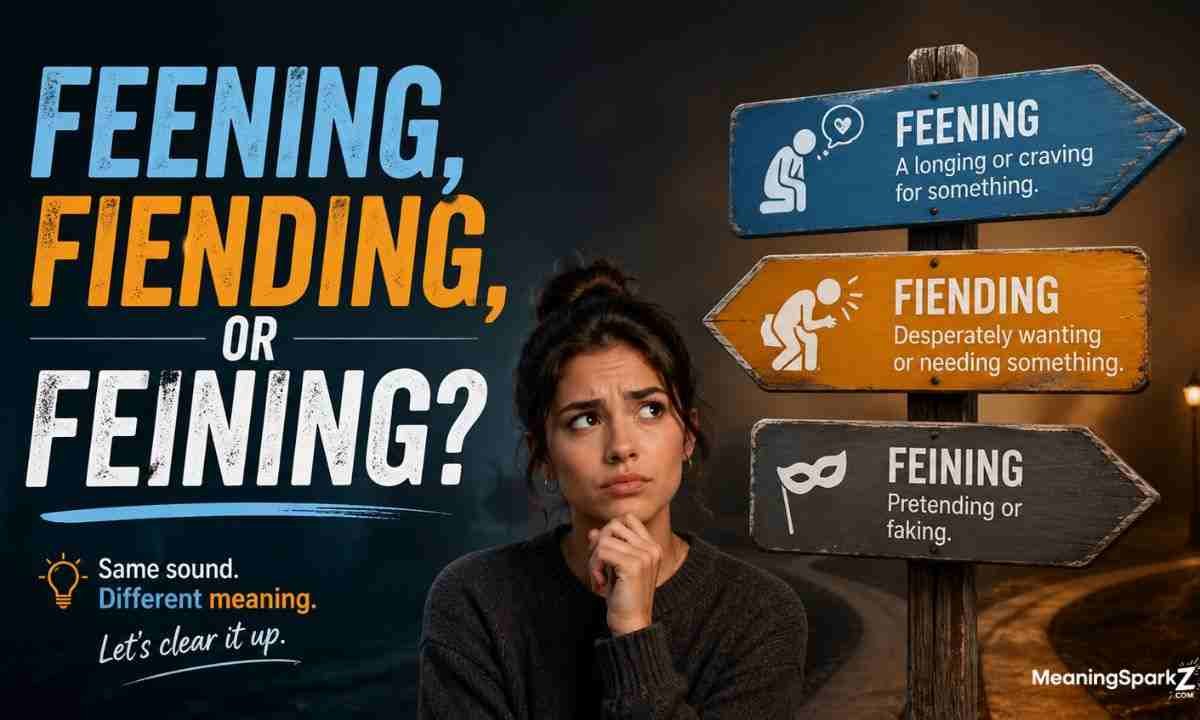
How Do You Spell It? Feening, Fiending, or Feining?
This is where most people get tripped up, and honestly, the confusion makes total sense.
All three spellings float around online, and they all point to the same meaning:
- Feening is the most common slang spelling
- Feining is an alternate popular spelling (and the one you searched)
- Fiending is the original, closest to the root word
Fiending comes from the word fiend, which traditionally means a devil or demon. Over time it evolved to describe someone with an obsessive, out-of-control craving. The slang versions, feening and feigning, are just how people naturally spell what they hear in everyday conversation.
So if you have been spelling it any of these three ways, you are not wrong. Language adapts. People adapt. Spellings follow.
Where Did the Word Fiend Come From? (The Historical Roots)
The word fiend goes back over a thousand years to Old English, where fēond meant an enemy or devil. In biblical and religious context, the Fiend was a direct reference to Satan himself, the ultimate symbol of uncontrollable evil desire and temptation.
This is not just trivia. It tells you something important about the word’s emotional weight. Calling someone a fiend for something was not light praise. It meant their desire had crossed a line from normal into something almost demonic in its intensity.
By the early 20th century, the word had shifted toward addiction. A dope fiend was someone controlled by drug cravings. By the time hip-hop culture picked it up in the late 1980s and 1990s, fiending had become part of everyday urban slang, describing any kind of desperate craving, not just addiction.
Today, you will hear it used for everything from coffee to compliments, which is quite a journey from ancient biblical demons.
Feining vs. Feigning: Do Not Mix These Up
This is the most common and most embarrassing mix-up in this entire conversation. Let’s fix it right now.
| Word | Pronunciation | Meaning | Example |
| Feining | FEE-ning | Desperately craving something | “I’m feigning for tacos right now.” |
| Feigning | FANE-ing | Pretending or faking something | “He was feigning surprise at his own party.” |
These words look similar on a page but they mean completely opposite things. Feigning comes from the Old French word feindre, meaning to pretend or simulate. It has nothing to do with cravings.
If you mix them up in a text or an essay, people will notice. One makes you sound hungry. The other makes you sound dishonest. Keep them separate.
Read Also This Blog Post : MM Meaning in Text: What It Really Stands For in Chats, Social Media, and Beyond (Updated 2026)
Real-Life Examples of How People Use Feining
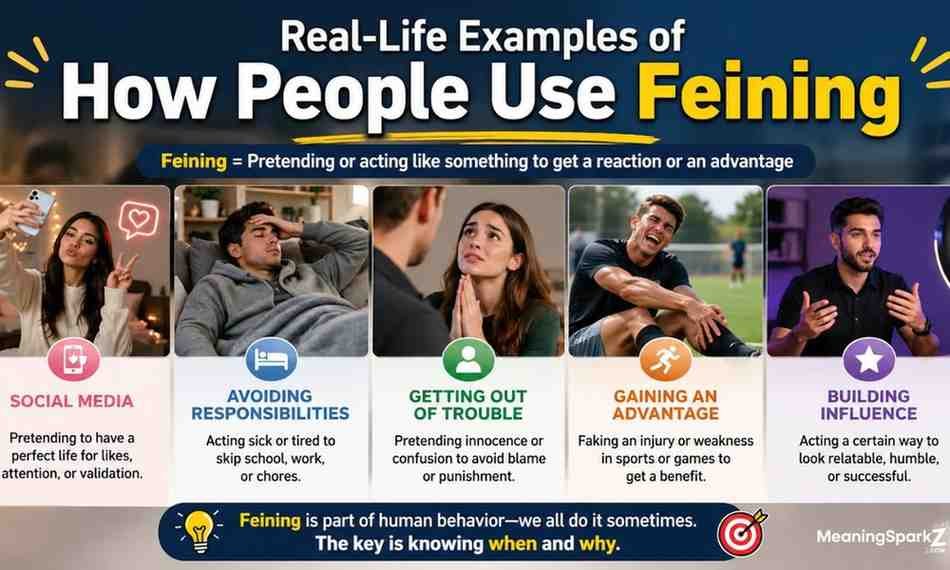
Seeing a word in action always makes it stick faster. Here are some natural, everyday examples:
In everyday conversation:
- “I haven’t had coffee yet and I’m feigning so bad right now.”
- “She’s been feigning for his attention all week.”
- “We’re all feigning for the next season to drop.”
In music and pop culture: Rappers and R&B artists have used this word for decades. Lyrics often describe feelings for love, money, or respect because those are the exact emotions that carry the most weight in storytelling. The rawness of the word makes it perfect for music.
In social media captions:
- “Just saw the trailer. I’m feeling for this movie.”
- “Three days without my gym. Feening is an understatement.”
Notice how flexible it is. It works for serious cravings and lighthearted ones. That versatility is exactly why it has stayed popular for so long.
Is Feining Only About Drugs? (Common Misconception)

Many people assume feigning is only drug slang. That was true in its earliest modern usage, but the word has expanded far beyond that original context.
Yes, the term grew out of language addiction. Yes, it once described someone craving substances. But language does not stay in one lane forever.
Today, feigning is used freely to describe any intense craving:
- Food cravings (“feining for ramen at midnight”)
- Emotional needs (“feining for some validation right now”)
- Entertainment (“feining for a new album drop”)
- Human connection (“feining to see my friends after months apart”)
Using it in conversation does not automatically carry any drug-related implication unless the surrounding context makes it obvious. Most listeners today understand it simply as intense craving, full stop.
Feining vs. Craving vs. Longing: What Is the Difference?
You might wonder why people do not just say craving or wanting. The answer is intensity and personality.
| Word | Intensity Level | Tone | Best Used For |
| Wanting | Low | Neutral | Mild preferences |
| Craving | Medium | Casual | Food, habits |
| Longing | Medium-High | Emotional, poetic | Love, nostalgia |
| Feining | Very High | Raw, street-level | Urgent, desperate desire |
Feining carries an edge that the other words do not. It suggests you are not just hoping for something. It suggests your whole brain is stuck on it. That extra punch is exactly why people reach for it in conversation when they want to express something real and unfiltered.
Read Also This Blog Post : IKK Meaning in Text: Complete Explanation, Usage, and Modern Context (Updated 2026)
Which Version Should You Use?
This depends entirely on your audience and context.
Use feining or feening if: You are texting a friend, writing social media captions, creating song lyrics, or writing dialogue in a story set in a contemporary urban environment. Both spellings are understood and accepted in casual, informal communication.
Use fiending if: You want to stay closer to the original word, perhaps in a context where slightly more formal slang is appropriate, or where you want the word to look more deliberate.
Avoid all three if: You are writing a formal essay, academic paper, cover letter, or professional email. In those spaces, craving or longing will always serve you better and will not raise eyebrows.
The rule is simple. Match the word to the room you are in.
Common Mistakes People Make With Feining
A few errors pop up again and again. Here is how to avoid them:
Mistake 1: Confusing feigning with feigning. Already covered, but worth repeating because it trips up even confident writers. Different pronunciation, different meaning, different origin. They just happen to look similar.
Mistake 2: Assuming it only applies to negative cravings. Feining can describe craving anything, including completely positive things like a vacation, a hug from a friend, or a long-awaited reunion. The word is about intensity, not negativity.
Mistake 3: Overcorrecting the spelling. Some people see “feening” and decide to “fix” it to “feigning” thinking it must be a misspelling. It is not. These are two separate words, and correcting someone’s feelings to feign is the kind of mistake that will confuse everyone in the conversation.
Mistake 4: Using it in formal writing. Feining is slang. Strong, expressive slang, but slang nonetheless. Dropping it into a business email or academic assignment will almost certainly not land the way you hope.
Why Has Feining Become So Popular in Modern Language?
The short answer is that it fills a gap.
English has plenty of words for mild desires. It has fewer words that carry that desperate, almost physical craving energy. Feining stepped into that space and refused to leave.
Social media accelerated its spread enormously. A word that might have stayed within certain regional or musical communities for decades can now go global overnight thanks to Twitter, TikTok, and Instagram captions. When millions of people see a word used naturally and expressively, they absorb it and start using it themselves.
It is also simply fun to say and write. There is something satisfying about a word that sounds like what it means. The elongated ee sound in feeling almost mimics a whine or a groan of craving. Language that feels right in the mouth tends to stick around.
Frequently Asked Questions
Is “feining” a real word?
It is a real slang word, widely understood and commonly used in informal spoken and written English. It does not yet appear in most traditional dictionaries under this exact spelling, but fiending does, and feining is an accepted phonetic variation of the same term.
Can I use feigning in a professional setting?
It is best to avoid it in professional or formal contexts. Stick to craving, longing, or desiring in workplace communication. Save feigning for your personal conversations where your audience will appreciate the energy behind it.
What is the difference between feening and fiending?
Functionally, nothing. They mean the same thing and come from the same root word. Fiending is the older, more standard spelling. Feening and feigning are the modern slang adaptations that came from how the word sounds in everyday speech.
The Bottom Line on Feining
Feining is one of those words that does more work per syllable than most polished vocabulary ever could. It takes a feeling everyone has experienced, that desperate, relentless craving for something just out of reach, and puts it into a single expressive word.
It comes from centuries of meaning, traveled through biblical language, Old English, addiction slang, hip-hop culture, and finally landed in your everyday text messages and social media captions. Not bad for a word most dictionaries have not officially caught up with yet.
